
On Aloneness
and the little life exchanges that keep us alive

The first time I heard aloneness described as a conscious choice, it threw me. We humans are meant to be social creatures, we learned to speak so we could gossip, gather and compare notes on being alive. Our success as a species has been based on cooperation. Communication, speaking, developing bonds––these are at our core. Sure, that was zillions of years ago. Way before internet and social media, where you can lie in your own bed and access the entire world, where you can see and hear and ‘follow’ so many people that being alone becomes a relief.
It surprised me, then, at the end of a Zoom writing workshop, when the leader showed us a pie chart of her typical day: all the hours she worked, a thin slice of dinner with her husband, but otherwise every slot occupied by work. “I have no friends,” she said proudly, as if a merit of worth. “No family nearby, no pets. Only my husband.” Mind you, she works with writers all day so it’s not that she’s only with inanimate objects. I thought of my mother, whose primary aim in life was surrounding herself with family and friends––a desire so ingrained in me that I still judge myself by it, still feel the cloak of shame for the lack.
I never had children, thus no grandchildren. My life includes loads of travel, always meeting new people, which is lovely in the moment but doesn’t have that textural staying power. Seeing that pie chart gave me a moment of relief. If she’s proud of not having friends (and I do have many, though spread around the world), isn’t it time for me to let that shame go? And if you want to get any writing done, or any music practice, you need to be alone much of the time alone. Maybe it’s a generational thing.
Scrolling through Instagram, it seems many young people are off on their own, rowing or sailing solo across oceans. I’ve been following one young woman rowing from California to Hawaii. Three months alone. The thought sends ripples of terror through me. Is she insanely disciplined or is this another form of human madness?
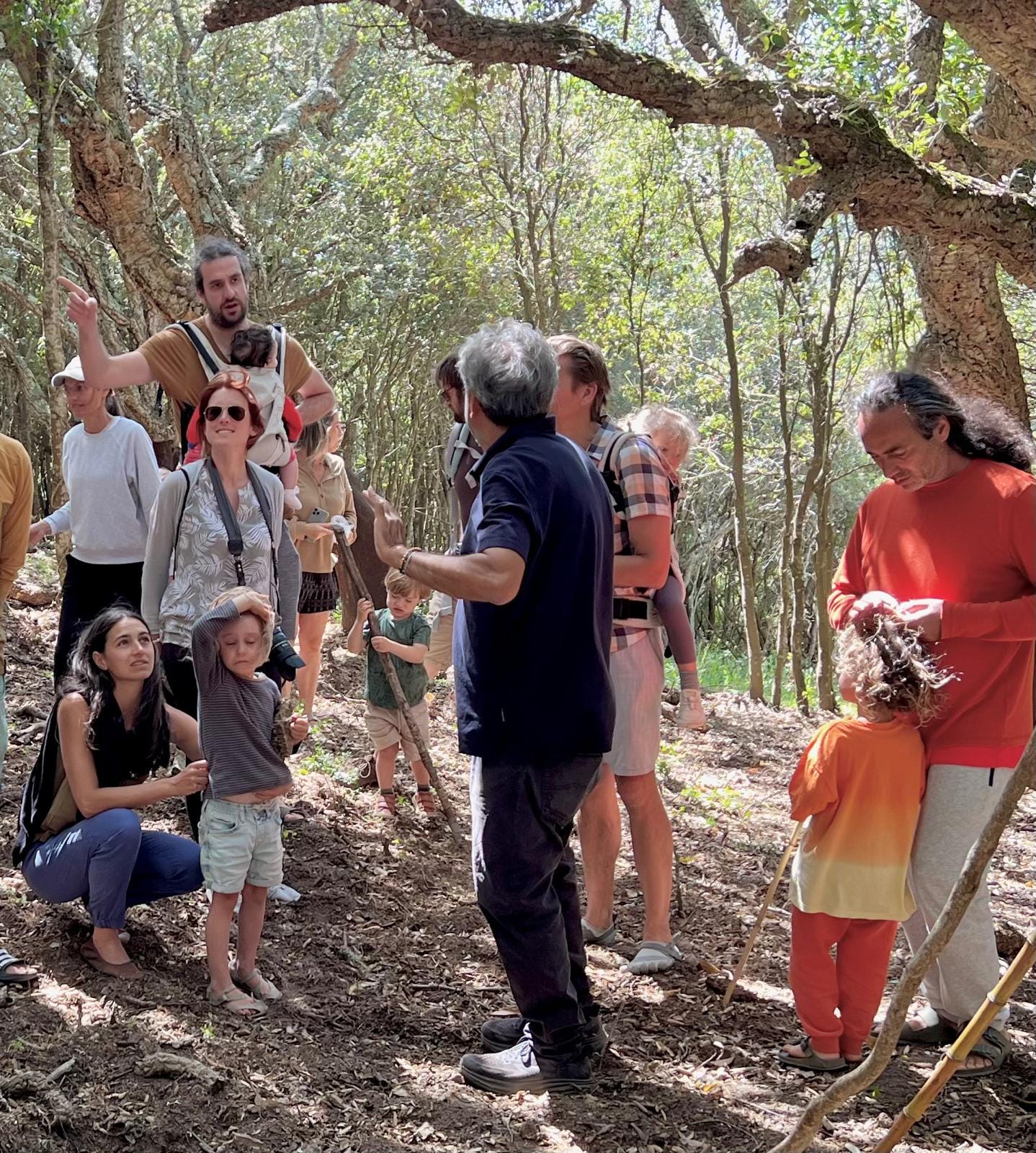
In this strange time, as Trump and co. are making the darker, uglier emotions acceptable, even admirable, I think of the work my husband does with climate change––how he joins, live and virtually, with others for environment actions in Norway and the world. And here on Corfu, where I’ve been several times and am staying again, all the joining together: ecstatic dances, workshops, groups gathering to honor the sunset, to sing together, to meditate. Young and old. So I know the values I feel strongest about haven’t vanished. We are so clever, we humans, with our active imaginations––we can shape-shift anything, change the narrative, reprogram ourselves.
I was talking about this to one of my brothers, who recently recovered from two bouts with cancer, which has made him more grateful for each day he’s healthy and alive. He sent me an article on happiness, that we’re basically wired for social life, that we care what others think of us, whether we are included or excluded from the tribe, and how important that tribe is. Even when we find ways to compensate and convince ourselves of how fine we’re doing, there’s a price.
That said, social life doesn’t need to be huge, not like in my mother’s time, the grand dinner parties with half of us wishing we weren’t there. For me, the best is often the little snippets between things, small exchanges in the course of a day, A little, as my grandfather would say, chewing the fat. It’s some of what I still love being in the south––the morning greetings of Kalimera, or Buenos días, or Buongiorno, the acknowledgment that you are there, that somebody sees you. Those exchange of life more than sustain us.
I think of the first year I lived in Oslo, the intense loneliness, the lack of exchange, almost killed me. Literally. I developed some rare organ failure and had to be operated on to save my life. The operation was successful, yet the doctor told me I was like a plant in the wrong soil––that I should arrange my life to be away as much as possible, which I’ve done ever since. “As wonderful as Norway is, as wonderful as the Norwegian people can be,” he said, “we might still kill you.” My deepest cells are Mediterranean, and no matter what I tell my mind, I need those exchanges and the impulse to express and share who I am at that moment, to connect through voice and body and presence.
I think of the Sunday mornings here on Corfu, at the weekly ecstatic dance, which I’m just about to leave for. There’s a young couple who come with their five-month old daughter. They take turns holding her so she gets to move and feel the dance; to hear and look, to smile at the others dancing by. Over the weeks, we’ve met often. The little girl recognizes me now, her whole face lights up. She’s too young to make deals with her organic feelings. You can see immediately how she loves when people stop and engage with her. No words, just smiles and faces of joy, the way her legs and arms and fingers move. No pretense, pure engagement––her instant reactions, her little tongue coming out, almost like a dog panting in joy, her limbs gyrating with the pleasure of being seen and seeing.
That has to be our core, whether we own it or not. It saddens me that so many people get annoyed now if you break into their sphere––(not so much at the dance) when a tiny moment of human connection becomes crossing a boundary or a sign that you’re toxically needy.
Maybe I’ll take that risk. Not to be toxically needy but to make connection. For me, I love those little exchanges with another––hey, we’re both alive and out of eight billion people, we get to cross paths.
I think back to my childhood, before air-conditioning, on hot summer nights in Queens, everyone out on their lawns or porches, the houses close together, neighbors calling across to each other, nobody sealed off behind high walls or private gardens, kids running under the sprinklers. Social life was like fabric, not fussed about or judged. It just was.
When did it start to shift and become so precious?
So impactful
Deborah - Can you unpack your experience of living and being in Norway versus living and being in the Mediterranean? I'm curious. I think I know what you are hitting upon but I'd like not to assume too much just the same.
Lovely piece that generally sits in the back of my mind. How much down time alone versus time with others. I know what the research says and I don't argue with it much. But on occasion I do.